Shanghe Tu
Origin
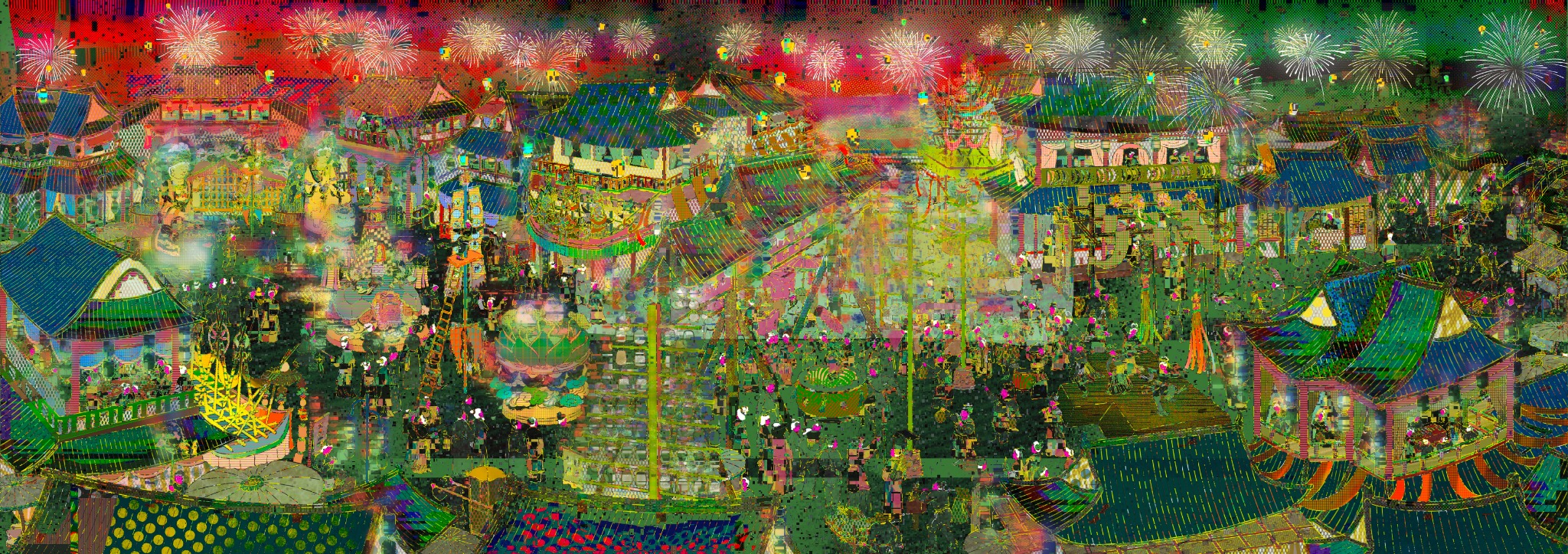
From 2022 to 2023, I illustrated books for Bashu Shushe, a publisher in Sichuan, China, that mainly publishes classical texts. That work is where Shanghe Tu started, both as research and as a project. I made a series of digital illustrations for Dongjing Meng Hua Lu (The Dream of Splendor in the Eastern Capital), digging through sources on architecture, clothing, objects, festivals, and city life, trying to reimagine a city that no longer exists.
01Motif
Dongjing Meng Hua Lu was written by Meng Yuanlao and finished in 1147. It looks back on the Northern Song and its lost capital, Dongjing — today’s Kaifeng — after their destruction by war. The memory of the city reads like a dream: its layout, shops and streets, festivals, entertainment, food, and rituals are all recorded in rich detail, almost like a piece of urban social history.
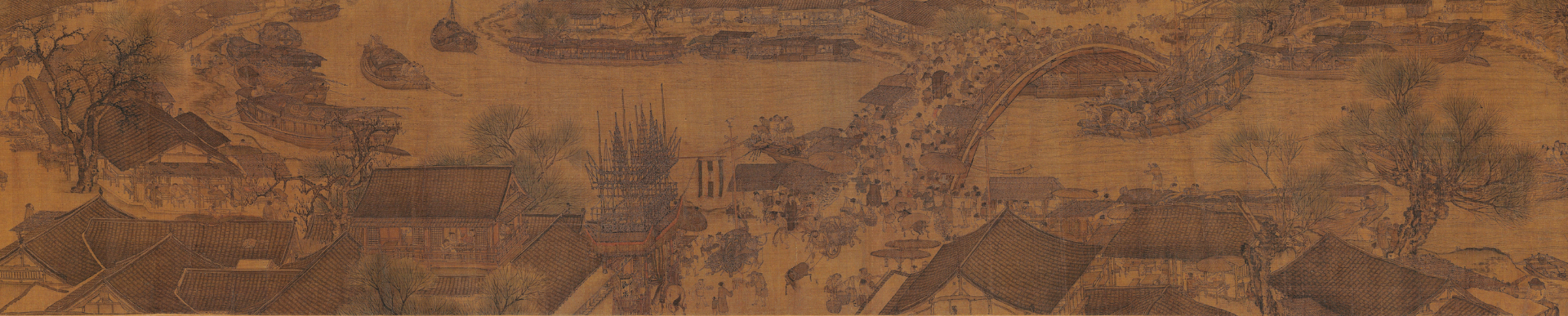
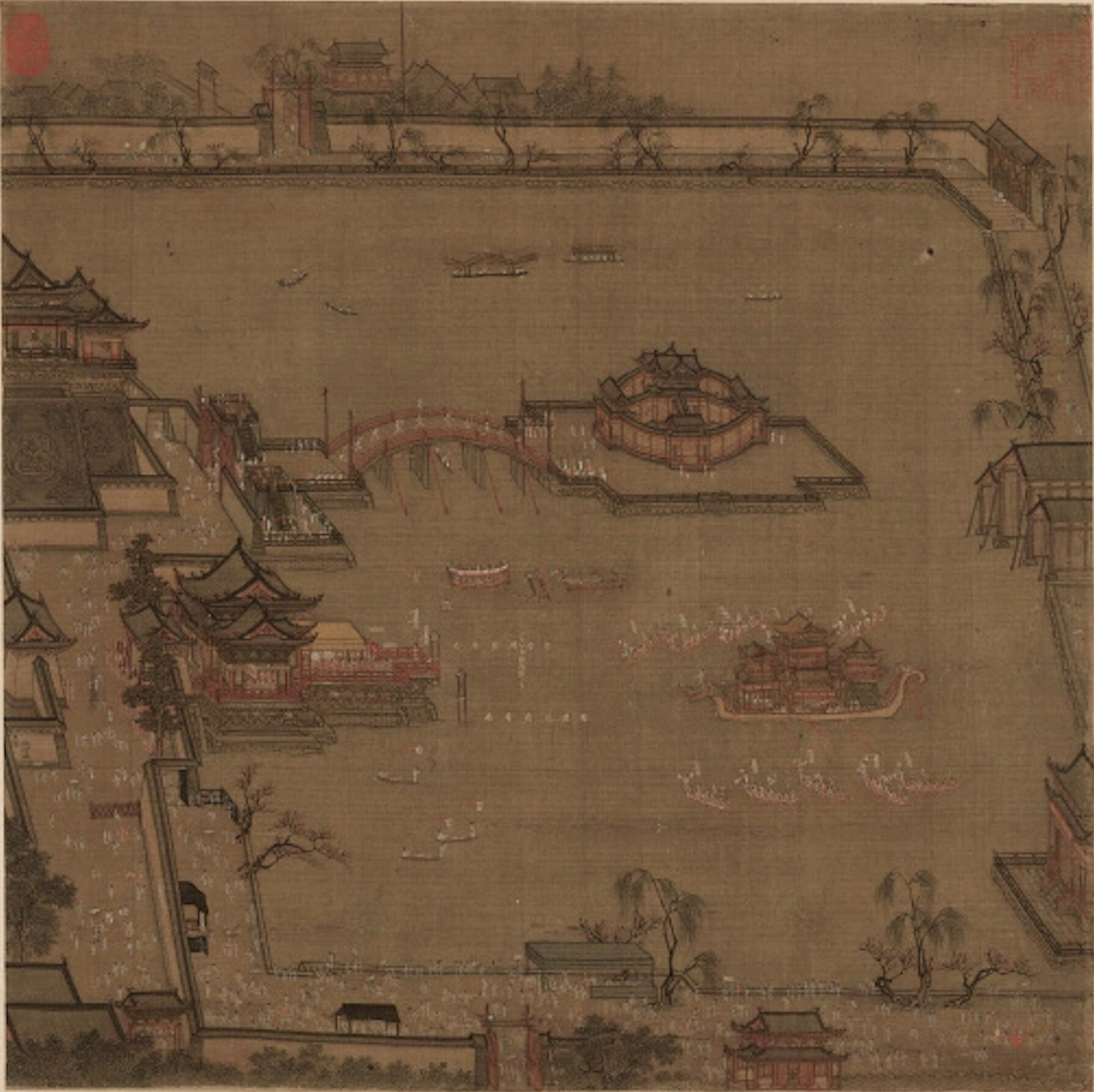
Qingming Shanghetu (Along the River During the Qingming Festival) was my most important visual reference during this time. Painted by Zhang Zeduan in the late Northern Song, around 1100–1126 — the Northern Song fell in 1127 — it is one of the most famous handscroll paintings in Chinese art history. It does not show the city from one fixed viewpoint. Instead, as the scroll unrolls, streets, rivers, buildings, and people keep appearing.
Dongjing Meng Hua Lu and Qingming Shanghetu depict the same city. Even though it was destroyed by war, it has remained in cultural memory for centuries, and each work developed into an important recurring motif or tradition of its own.
Dongjing Meng Hua Lu started a form of “city remembrance” writing that was imitated again and again — sometimes referred to by scholars as the “Meng Hua Lu style.”
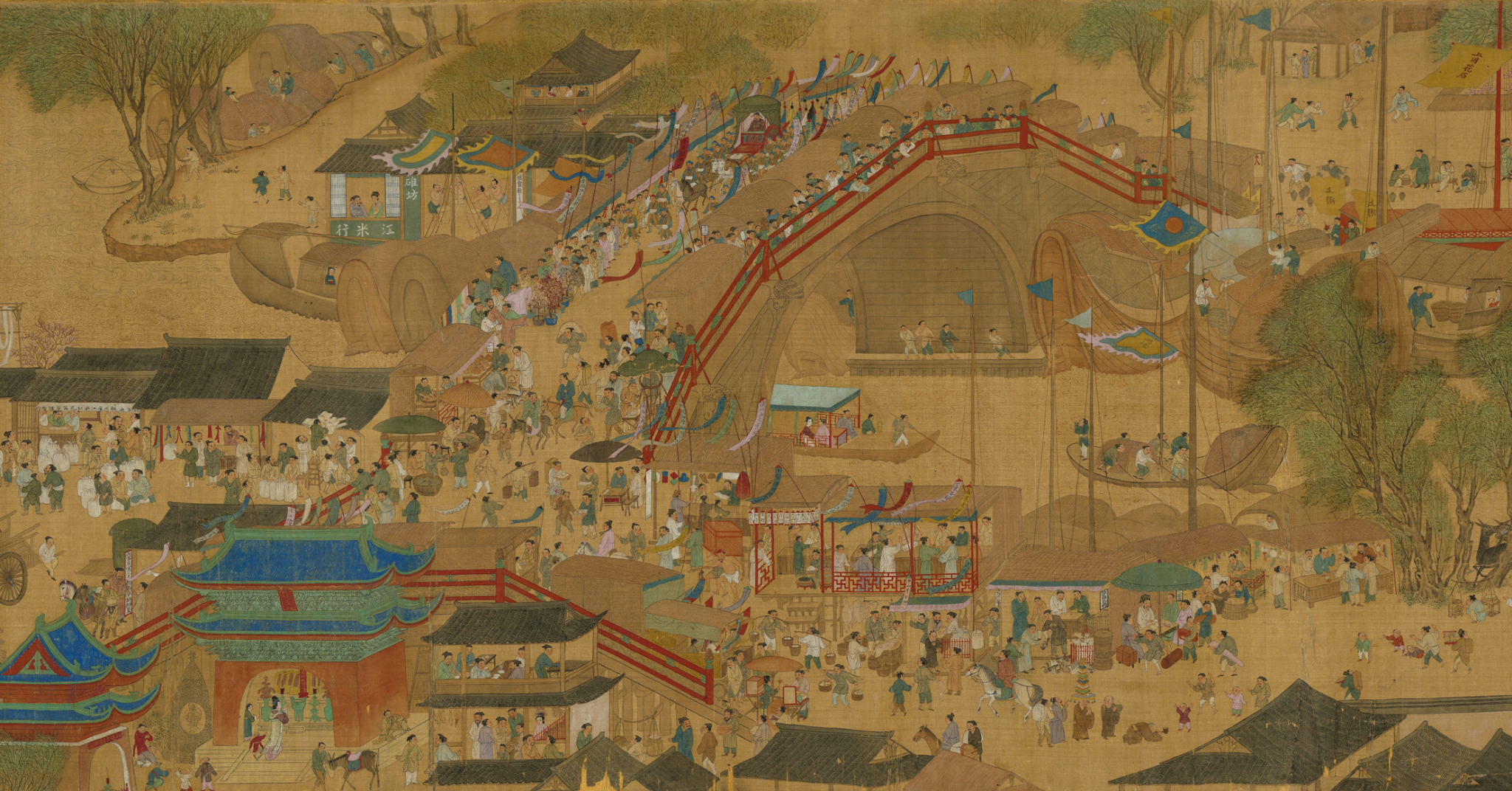
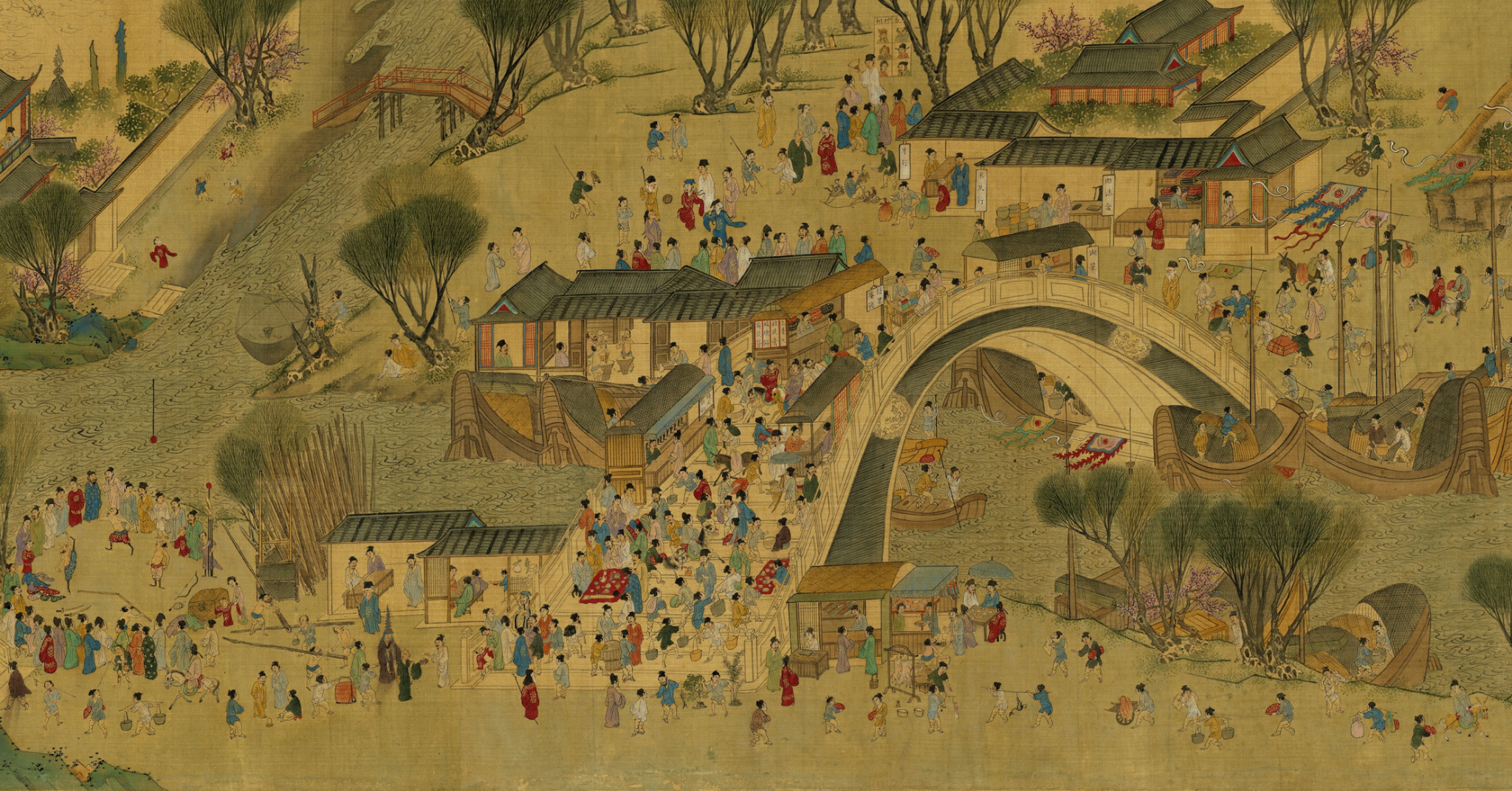
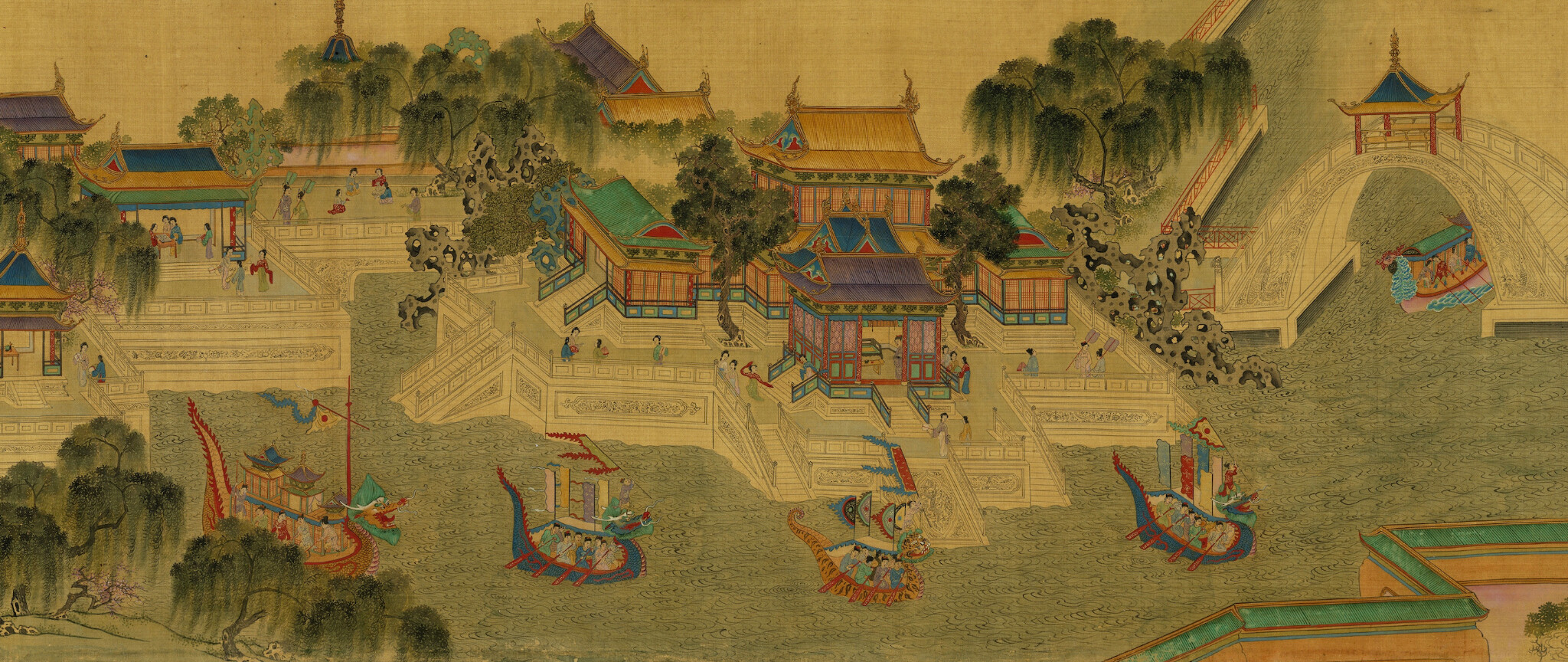
Qingming Shanghetu also moved from a private imperial collection to become a pictorial motif that was repeatedly copied, adapted, and reproduced. There are reportedly 117 known versions of “Shanghe Tu.” They are not simple copies of the original. They keep certain basic structures — a river, bridges, a city, commerce, crowds, a bustling social life, and the handscroll format — but use them to reflect the societies in which they were made.
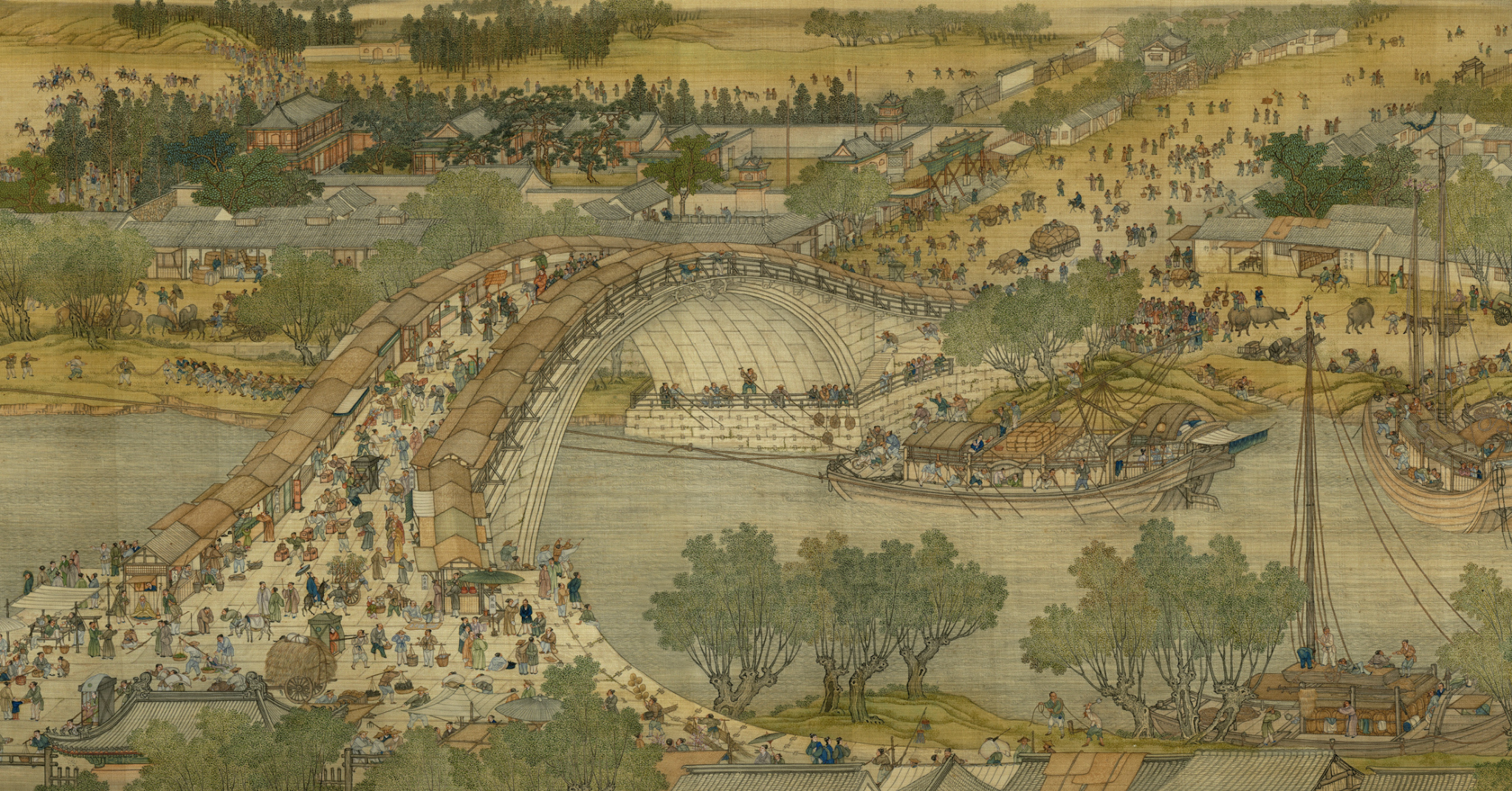
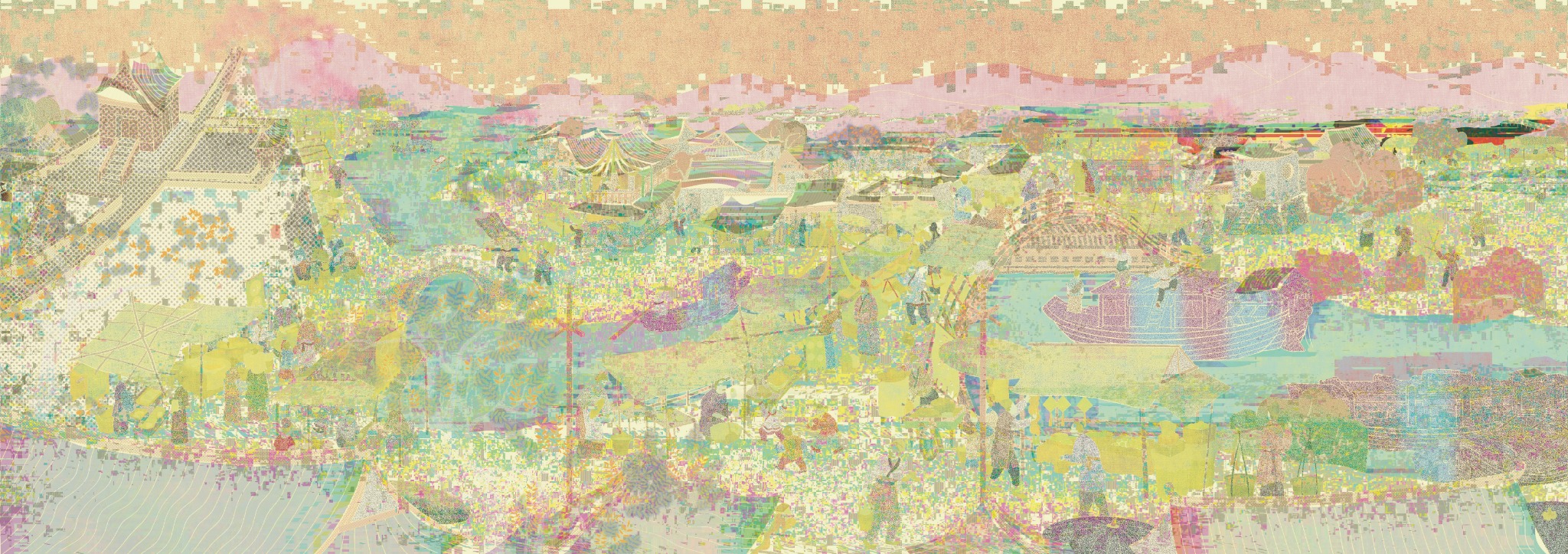
02Publicness:
How Does an Image Become Public Memory?
Qingming Shanghetu is an image system that has passed through centuries of changing media.
The original Qingming Shanghetu was painted by Zhang Zeduan and first held in the Northern Song court collection. An estimated 117 copies, variants, and imitations now survive around the world. Later, through modern media, the image entered television, broadcasting, and even basic art-education textbooks.
Through imitations, publications, public education, research archives, digital images, and cultural products, Qingming Shanghetu gradually moved from a privately held original to become part of public cultural memory.
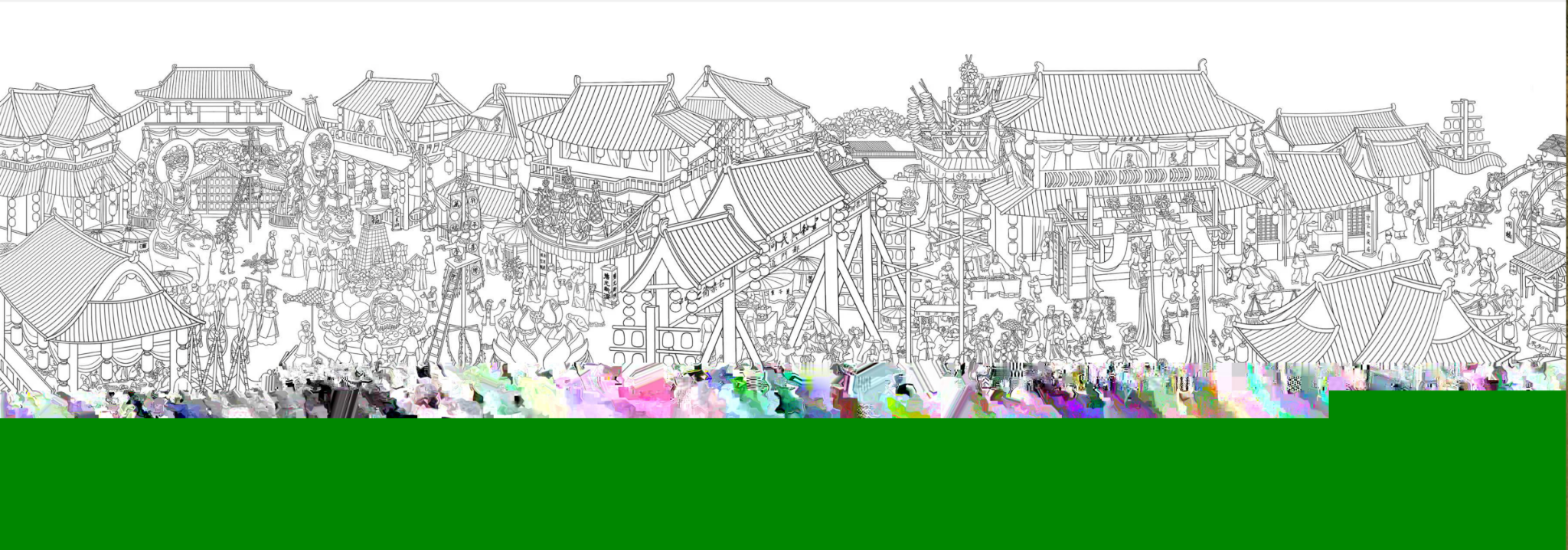
03Material:
What Is Digital Painting Made Of?
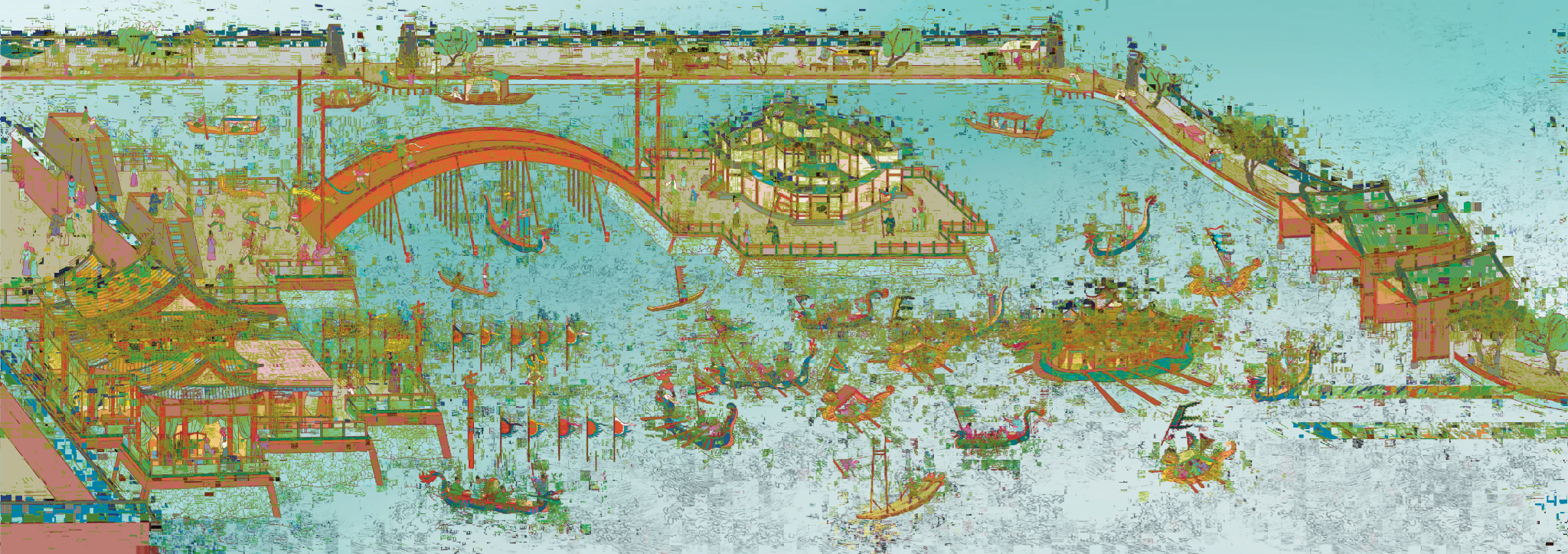
I originally tried to use digital painting to imitate a traditional handscroll, but I was not happy with the result. I realized I had been trying to hide the characteristics of the digital medium. What the viewer saw was information and knowledge about architecture, people, and festivals — not pixels, RGB, layers, or data. I was treating the digital canvas like paper that leaves no trace.
But as the illustrations became more finished, they started to look like plastic to me — smooth, rigid, even boring, no matter how much interesting detail I packed into them.
Unlike a traditional handscroll, made of paper, silk, and ink, digital painting is made of pixels and layers. Technology can make it look like physical materials, or give it a completely smooth and even finish, but that does not change what it is made of.
So I started destroying the images on purpose: splitting the RGB channels, misaligning layers, duplicating, overlapping, pixelating, and distorting — processes associated with glitch. Through this process of degradation, the material structure of the digital image becomes visible. To me, the digital image has its own language:
Pixel · RGB · Layer · Glitch · Degradation · Restoration · RGB Split · Displacement · Distortion · Pan
But even after this process of destruction and degradation, the data can still return to that perfect, boring, illustrative image — you just have to undo enough steps.
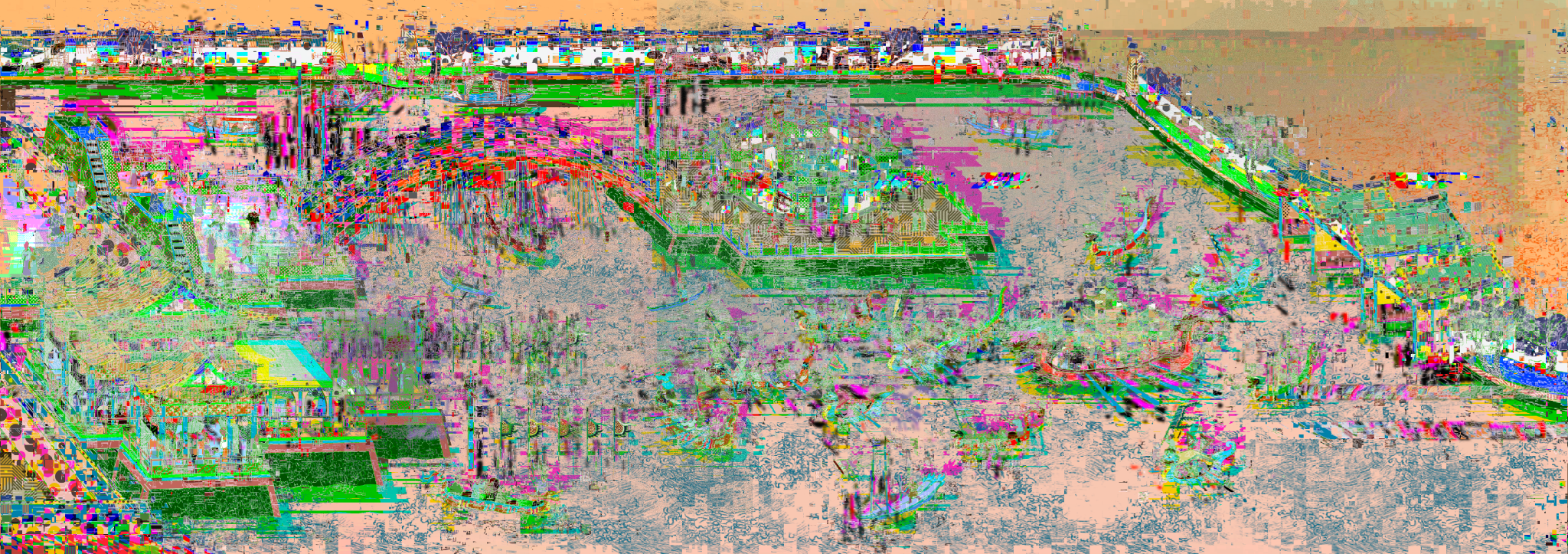
Historical references

04Floating Above the Interface
I work on an iPad, in Procreate. A fixed-size screen holds a huge virtual canvas that I can keep moving, zooming in and out of. I can go from the whole city straight into one window, one roof tile, or one line, then zoom back out to the full image. The spatial jumps happen very fast.
While I work, my body stays still, hunched over the screen, but the image moves, warps, and zooms at high speed. Double-tap the screen and I am back one step. It got to the point that when I went back to painting with physical materials, if I did not like a brushstroke, my hand would unconsciously try to double-tap the table.
The digital medium feels like a transparent interface. It makes itself invisible. I cannot enter the image — I float above it instead. It is a frictionless medium, and I find it hard to feel a deeper physical connection to an image made this way.
In a way, that is exactly why I wanted to destroy it.